


Did you know that one of the best ways to assess your gut health is to determine how quickly food is passing through your digestive tract?
This is known as your bowel transit time, and it can be measured at home using the sweetcorn test.

When food moves through the bowel at an appropriate pace…
- The small intestine has adequate time to absorb nutrients, vitamins, and minerals
- The large intestine can reabsorb water from the stool
- Gut bacteria have time to ferment fibre for fuel
- Pathogens and toxins are moved through efficiently
When bowel transit time is too fast
When the muscular contractions that move food through your digestive system work overtime, gut transit time becomes too fast.
This can lead to:
- Impaired nutrient absorption
- Urgency and loose stools
- Diarrhoea
- Weight loss due to malabsorption
The integrity of the gut lining can also become compromised. When transit is too fast, gut bacteria don’t have adequate time to ferment fibre, meaning fewer short-chain fatty acids are produced – the primary fuel source of the cells lining your colon.
A fast transit time is associated with IBS, SIBO, IBD, food intolerances and infections, with hyperthyroidism being a common driver.
When bowel transit time is too slow
Conversely, when gut motility slows, a different set of problems can emerge.
This can lead to:
- Bacterial overgrowth, as bacteria have greater opportunity to proliferate
- Bloating and sluggish digestion
- Constipation
- Increased toxic load on the liver
Similarly, slow transit disrupts the microbiome, but in the opposite direction. Excess fermentation and bacterial overgrowth drive inflammation and further compromise gut lining integrity.
A slow bowel transit time is associated with IBS, functional dyspepsia (a kind of chronic indigestion) and gastroparesis (“stomach paralysis”), with hypothyroidism being a key driver.
🌽 P.S: It’s worth noting that both IBS and SIBO can drive either a fast or slow transit time depending on the subtype.
Ready to try the sweetcorn test?
Here’s how to do the corn test at home:
- Consume a whole corn on the cob (not just a few kernels!) and note the date and time
- Note the date and time you first see corn kernels present in your stool
- Note the date and time you last see them
I recommend using sweetcorn as it’s relatively tough to digest and easy to spot in the stool. But you can also mix a tablespoon of white sesame seeds into a glass of water as an alternative.
Consuming beets is another option, as they’ll dye your stool red temporarily. But please refrain from using charcoal – whilst it will colour the stool black, it can slow the bowels and give a false result.
What your results may mean
If you notice the first and last of the corn in your stool within that 14-24 hour window, congratulations, you have a healthy gut transit time! Ideally, we want ALL remaining corn to be gone by the 36-hour mark at the latest.
Note that “normal” is technically anywhere between 10-73 hours, but we’re going for optimal. 😉
Anything less than 14 hours indicates the bowel is moving too quickly. For example, if you’re pooping corn 4 hours after eating, this could be due to inflammation, infection, stress, hyperthyroidism or other factors.
Anything beyond 24 hours (and certainly >36 hours) indicates a sluggish bowel. For example, if you’re still noticing corn in your stool weeks later, Houston, we have a problem!
Contributing factors here could include poor fibre intake, dehydration, certain medications, stress, hypothyroidism, and more.
| Whole Bowel Transit | Time in Hours |
|---|---|
| Normal | 10-73 hrs [Source] |
| Optimal | 14-24 hrs |
| Fast | <14 hrs |
| Slow | >24 hrs |
3 steps to a healthier bowel transit time
If your gut is in need of support, the following three steps are usually enough for most people to make a meaningful difference:
- Ensure you’re adequately hydrated: 2 litres of water daily, flavoured with fresh lemon or mint if that helps you drink it!
- Hit your daily fibre goals: aim for 25-30g of dietary fibre
- Move your body daily: movement of any kind (walking, swimming, weight training) enhances blood flow to the digestive organs and stimulates peristalsis
Sometimes diet and lifestyle alone aren’t enough, particularly when there’s an underlying driver.
If you’re still not falling within the 14-24 hour mark, please consider booking an appointment for holistic support. For example, if you’re navigating a thyroid imbalance, this will need to be addressed in tandem with your gut.
Hope that helps!
Till next time,
Lauren.
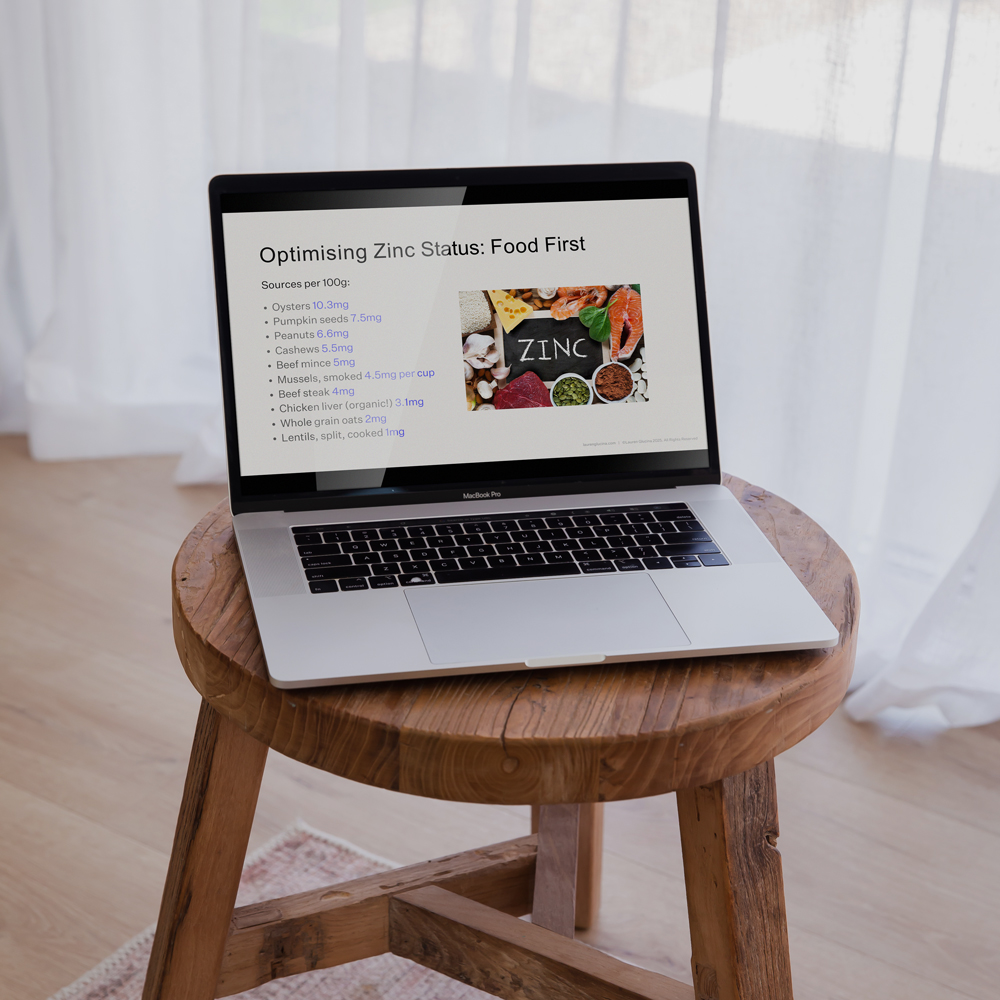
Feeling burnt out or off your game?
It might be low iron, B12, magnesium, zinc, or vitamin D. Watch Nutrient Foundations for Energy, Mood & Resilience to learn where to start.
X




Comments +