


If you’ve been diagnosed with a thyroid condition and mentioned you enjoy tofu or miso soup, chances are someone has met you with a sharp intake of breath and a well-meaning “oh, you probably shouldn’t be eating that.” And just like that, another food joins the ever-growing list of things you’re supposed to avoid.
The truth is, soy has become one of the most feared foods in the thyroid community, but before we throw the baby out with the bathwater, there are some genuinely impressive health benefits to consider here, so let’s untangle this properly.
The type of soy matters
First of all, I need to start with this: not all soy products are equal, and the type really does matter.
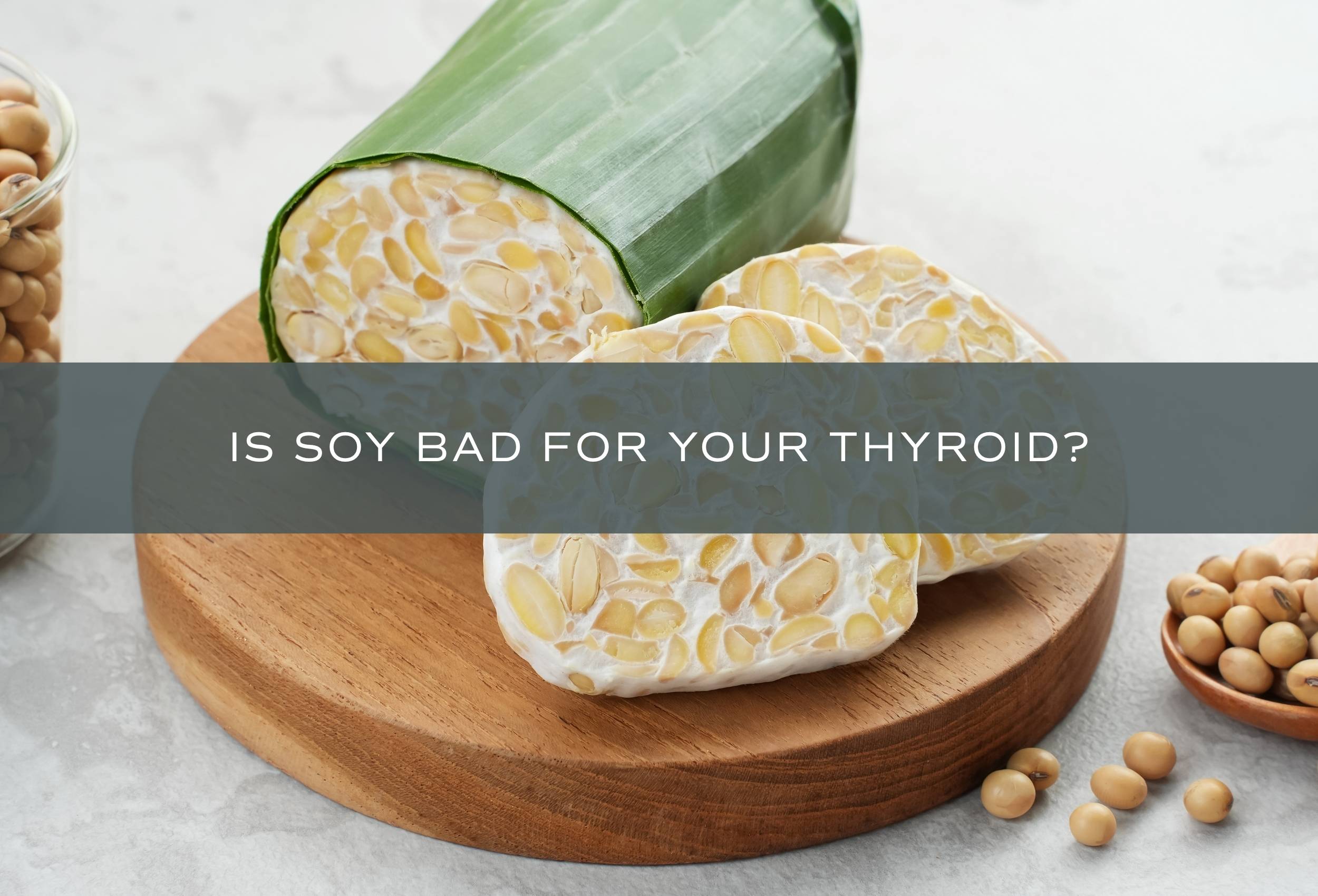
Traditional soy products are whole or minimally processed and include miso, tempeh, natto and soy sauce or tamari (all fermented), soy milk made from the whole soybean, tofu and edamame.
These foods have been eaten across Asia for thousands of years, and are packed with fibre, vitamins and minerals. Fermented forms in particular are especially easy to digest.
Then there’s modern, processed soy, including soy protein isolates and concentrates, hydrolysed soy proteins, and refined soybean oil.
These have been quietly added to protein bars and shakes, meat substitutes, and ready-made meals everywhere (I mean seriously everywhere, think infant formulas, breakfast cereals, breads and crackers, instant noodles, frozen meals, ice cream and desserts).
Processed soy is typically more refined, and in some cases extracted using solvents like hexane. It’s also often genetically modified, and much of the original nutrient content found in whole soy foods is lost during processing.
When we talk about soy and thyroid health, the form genuinely matters, so keep that in mind as we go.
Soy, hypothyroidism and goitrogenic concerns
Soy consumption is associated with an impressive range of health benefits, including protection against osteoporosis, cardiovascular disease, diabetes, breast and prostate cancer, and menopausal symptoms, largely attributed to its two key components: soy protein and isoflavones.
However, these same compounds have raised concerns for those with thyroid disorders.
Soy isoflavones have a mild goitrogenic effect, meaning they may interfere with thyroid hormone production by reducing iodine uptake and inhibiting thyroid peroxidase (TPO), an enzyme involved in producing T3 and T4.
In practice though, the picture is more reassuring than it first appears.
A meta-analysis of clinical studies found that while soy consumption in healthy adults produced elevations in TSH, it had no significant effect on free thyroid hormones T3 and T4, suggesting that any impact on thyroid function is unlikely to be clinically meaningful in most people [1].
The important caveat is in those with subclinical hypothyroidism. In some cases, individuals with already compromised thyroid function went on to develop overt hypothyroidism after soy consumption. For this reason, caution may be warranted if thyroid function is not yet well supported.
However, if your hypothyroidism is well-managed and you are iodine-replete, which appears to be protective [2], there may still be a place for small to moderate amounts of traditionally prepared soy foods such as miso and tempeh in the diet.
Soy and levothyroxine
We’re not quite out of the woods yet! Perhaps the most clinically relevant concern for those with hypothyroidism or Hashimoto’s disease is that soy can interfere with levothyroxine absorption if consumed too close to your dose… but so can calcium, iron, coffee and fibre supplements.
The solution here is to ensure you take your medication on an empty stomach and wait 60 minutes before eating.
Soy, digestive upset and immune reactivity
Highly processed forms of soy may disrupt the gut microbiome, while the naturally occurring indigestible carbohydrates in soy can contribute to digestive symptoms such as bloating, gas, and loose stools in some individuals.
When these symptoms are present, the resulting inflammation may impair the absorption of key nutrients required for thyroid health, as well as the effectiveness of thyroid medications.
In addition, a small percentage of individuals have a true soy allergy, in which case avoidance is clearly warranted. IgE blood testing can help determine whether this applies to you.
Soy in perimenopause, menopause
If you’re navigating both thyroid health and perimenopause and menopause, this is where soy earns its place.
The soy isoflavones we have been discussing, specifically genistein and daidzein, are a type of phytoestrogen that can weakly interact with oestrogen receptors. They are not the same as the oestrogen your body produces, and are far weaker than synthetic oestrogens.
As oestrogen declines through perimenopause and into menopause, these phytoestrogens can gently bind to oestrogen receptors and help buffer some of that drop.
Evidence supports modest reductions in hot flushes and night sweats, improvements in bone density, and cardiovascular benefits with regular whole soy consumption [3].
Now, you may have heard that soy increases breast cancer risk, and this understandably puts many women off.
However, this fear originated from animal studies using extremely concentrated doses of isolated isoflavones, far beyond anything you would consume through whole foods.
In reality, phytoestrogens have a modulating effect, meaning they can weakly activate oestrogen receptors but also block stronger oestrogens from doing so.
🌱🍱🥢 A long-term observational study of over 300,000 women in China found that each 10mg increase in daily soy intake was associated with a 3% reduction in breast cancer risk. Based on these findings, the researchers suggested that higher soy intake may offer potential protective benefits [4]. 🌱🍱🥢
It’s worth knowing though that the benefit is not equal for everyone. The ability to convert daidzein into equol, a more potent metabolite with stronger oestrogenic activity, varies between individuals and is influenced by gut microbiome composition.
Only around 30-50% of Western women are equol producers [5], which may partly explain why some women find soy genuinely helpful for menopausal symptoms, while others notice little difference.
So, should you cut soy out?
If you have a thyroid condition and are symptomatic, or have known suboptimal iodine levels, then avoiding soy while you work on thyroid support and nutrient optimisation is a reasonable approach.
Otherwise, my general recommendation (assuming you don’t have a true soy allergy) is to:
- Choose organic whole soy and avoid GMO, processed soy isolates
- If drinking soy milk, look for a brand that uses whole soybeans with a clean ingredient list, free from isolates, emulsifiers and preservatives. Pure Harvest Organic Unsweetened Soy is a good example
- Mind your timing around levothyroxine
- Ensure adequate iodine intake
- Keep consumption low to moderate, around 2 to 4 servings per week
- Listen to your own body, as individual responses vary
Food fear has a cost, nutritionally, socially and psychologically. Miso soup, edamame, tempeh… these are nourishing whole foods with centuries of safe consumption behind them.
With appropriate context, these foods can find a place in your diet again.
Till next time,
Lauren. 🌿
References:
- Otun J, Sahebkar A, Östlundh L, et al. Systematic review and meta-analysis on the effect of soy on thyroid function. Sci Rep. 2019;9:3964. doi:10.1038/s41598-019-40647-x.
- Bruce B, Messina M, Spiller GA. Isoflavone supplements do not affect thyroid function in iodine-replete postmenopausal women. J Med Food. 2003;6(4):309–316. doi:10.1089/109662003772519859.
- Levis S, Griebeler ML. The role of soy foods in the treatment of menopausal symptoms. J Nutr. 2010;140(12):2318S–2321S. doi:10.3945/jn.110.124388.
- Wei Y, Lv J, Guo Y, Bian Z, et al. Soy intake and breast cancer risk: a prospective study of 300,000 Chinese women and a dose-response meta-analysis. Eur J Epidemiol. 2020;35(6):567–578. doi:10.1007/s10654-019-00585-4.
- Lampe JW. Is equol the key to the efficacy of soy foods? Am J Clin Nutr. 2009;89(5):1664S–1667S. doi:10.3945/ajcn.2009.26736T.



Comments +